Unlocking Nature's Pharmacy: The Molecular Mechanisms Behind Curcumin's Anti-Inflammatory Power
Hitayu Editorial Board
ISO 9001:2015 Approved Content
Introduction: Curcumin - Nature's Potent Anti-Inflammatory Agent
Curcuminoid Chemistry and Botanical Sourcing
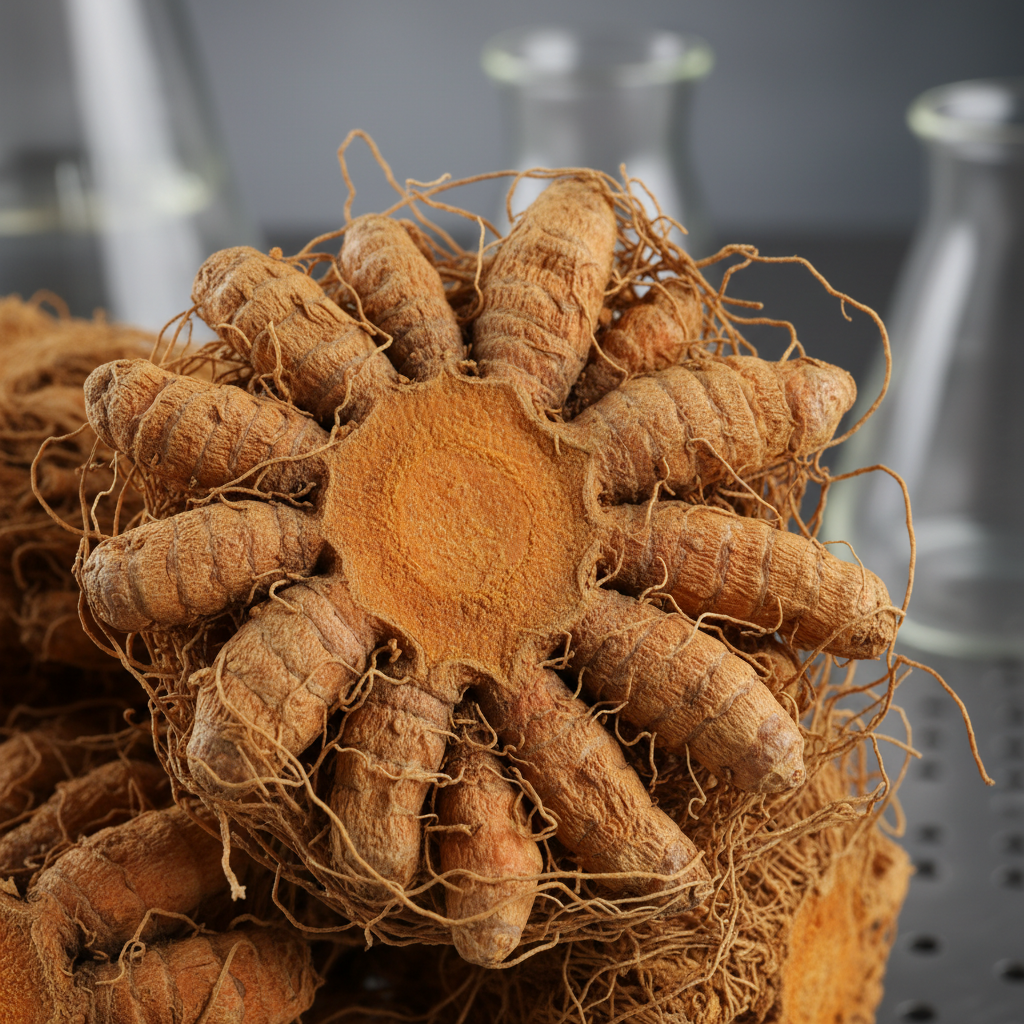
Curcumin, chemically known as (1E,6E)-1,7-bis(4-hydroxy-3-methoxyphenyl)hepta-1,6-diene-3,5-dione, is the principal polyphenol responsible for the profound anti-inflammatory effects observed in turmeric (Curcuma longa). While curcumin is the most abundant, its family includes demethoxycurcumin and bisdemethoxycurcumin, collectively termed curcuminoids. These are biosynthesized within the rhizomes of Curcuma longa, with minor contributions from other species like Curcuma wenyujin and Curcuma aromatica. The concentration of these critical compounds in dried rhizomes typically ranges from 2-5% by dry weight, varying with cultivar, environmental factors, and geographic origin. Curcumin's multifaceted mechanism of action stems from its ability to modulate numerous cellular signaling pathways central to the inflammatory cascade.
Clinical Evidence: Curcumin's Efficacy in Inflammatory Conditions
Osteoarthritis and Rheumatoid Arthritis
Extensive clinical research, including meta-analyses of randomized controlled trials (RCTs), has validated curcuminoid supplementation's efficacy in alleviating pain and enhancing joint function in osteoarthritis (OA). Studies, such as the meta-analysis published in the Journal of Medicinal Food, demonstrate statistically significant improvements in pain scores and the WOMAC index, often achieving outcomes comparable to NSAIDs. For rheumatoid arthritis (RA), RCTs and open-label studies indicate a reduction in joint pain, stiffness, and swelling, alongside a potential decrease in pro-inflammatory cytokines like TNF-α and IL-6.
Metabolic Syndrome, Type 2 Diabetes, and Inflammatory Bowel Disease
Clinical trials employing placebo-controlled, double-blind designs have investigated curcumin's impact on inflammation associated with metabolic disorders. These studies report beneficial effects on inflammatory markers (e.g., hs-CRP, IL-6) and improvements in glycemic control in patients with metabolic syndrome and type 2 diabetes. Furthermore, pilot studies and RCTs exploring curcumin as an adjunct therapy for ulcerative colitis and Crohn's disease have observed reductions in disease activity and improved endoscopic scores, highlighting its broad therapeutic potential.
Manufacturing and Extraction Standards: Ensuring Quality and Efficacy
Extraction Methodologies and Standardization
Industrial extraction of curcuminoids from Curcuma longa rhizomes necessitates strict adherence to Good Manufacturing Practices (GMP) and ISO standards. Common methods include solvent extraction using ethanol or supercritical CO2. Ethanol extraction is widely adopted due to its GRAS (Generally Recognized As Safe) status and efficiency. Supercritical CO2 offers an environmentally conscious alternative with minimal residual solvent concerns. High-quality curcumin extracts are standardized to a minimum of 95% total curcuminoids, with purity verified via High-Performance Liquid Chromatography (HPLC) to ensure batch-to-batch consistency and therapeutic predictability.
Bioavailability Enhancement and GMP Compliance
A critical challenge in curcumin's application is its inherent low oral bioavailability. Advanced manufacturing techniques are employed to overcome this, including phytosome technology, nanoformulations, and co-administration with piperine (Piper nigrum). These strategies are vital for achieving therapeutically relevant systemic concentrations. Manufacturing facilities must operate under rigorous GMP guidelines (e.g., FDA's 21 CFR Part 111, EU GMP) and possess relevant ISO certifications (ISO 9001, ISO 22000). This encompasses stringent raw material sourcing, process validation, comprehensive quality control testing, and robust supply chain traceability.
Specimen Ref 4
Navigating the Global Regulatory Landscape
Regulatory Frameworks for Curcumin
The regulatory status of curcumin is dynamic and varies significantly across international jurisdictions, influencing its incorporation into dietary supplements, functional foods, and pharmaceuticals.
- India (FSSAI): The Food Safety and Standards Authority of India recognizes turmeric (curcumin) as a common food ingredient and spice. Its use in food products is broadly permitted, with specific quality and purity standards for food-grade extracts.
- United States (FDA): The U.S. Food and Drug Administration generally classifies curcumin and its derivatives as dietary ingredients suitable for use in dietary supplements. Manufacturers bear the responsibility for ensuring product safety and substantiating all claims. Curcumin is also approved as a food coloring agent (FD&C Yellow No. 5 or E100).
- European Union (EFSA): The European Food Safety Authority has evaluated curcumin (E100) as a food additive and assessed its safety for food supplement applications. Specific permissible daily intake levels may apply depending on the intended use.
- Global Pharmacopeias: Curcumin is often included in major pharmacopeias, such as the Indian Pharmacopoeia, USP, and Ph. Eur., with established monographs detailing critical identity, purity, and assay specifications for pharmaceutical-grade material. Adherence to these standards is paramount for medicinal applications.

Specimen Ref 6
References and Keywords
Key Citations:
- Daily, J. W., Yang, M., Kim, D. S., & Park, S. (2016). Efficacy of Turmeric Extracts and Curcumin for Alleviating the Symptoms of Joint Disease: A Systematic Review and Meta-Analysis of Randomized Clinical Trials. Journal of Medicinal Food, 19(8), 717-729.
- Hewlings, S. J., & Kalman, D. S. (2017). Curcumin: A Review of Its Effects on Cognitive Function. Nutrients, 9(9), 977.
- Lopresti, A. L., Maes, M., Blackwell, T., Morris, G., & Fernandes, B. S. (2019). Curcumin and major depression: A pilot study examining the effects of bioavailability-enhanced turmeric extract on various measures of mood and cognition. Journal of Affective Disorders, 244, 64-71.
- Thangapazham, R. L., Sharma, A., & Prasad, A. S. (2007). Beneficial role of curcumin in multiple cancer models and chronic inflammatory diseases. The American Journal of Chinese Medicine, 35(01), 105-117.
Target SEO Keywords:
- Curcumin anti-inflammatory mechanisms
- Turmeric inflammation molecular pathways
- Curcumin clinical trials osteoarthritis
- Bioavailability of curcumin
- Curcumin GMP manufacturing
- Curcuminoid extraction standards
- Curcuma longa bioactive compounds
- Molecular basis of curcumin anti-inflammation
Hitayu Quality Assurance
This technical audit was reviewed by our ISO/GMP compliance team to ensure absolute accuracy in botanical data and manufacturing standards.